Substation Engineering & Design

Physical, civil/structural, and drawing scope for utility substation programs across Arizona and the Southwest, built to the owner's standards.

  • SDVOSB Certified
  • SRP & APS Standards Fluency
  • Engineer-Supervised QA/QC
  • ISNetworld RAVS Compliant
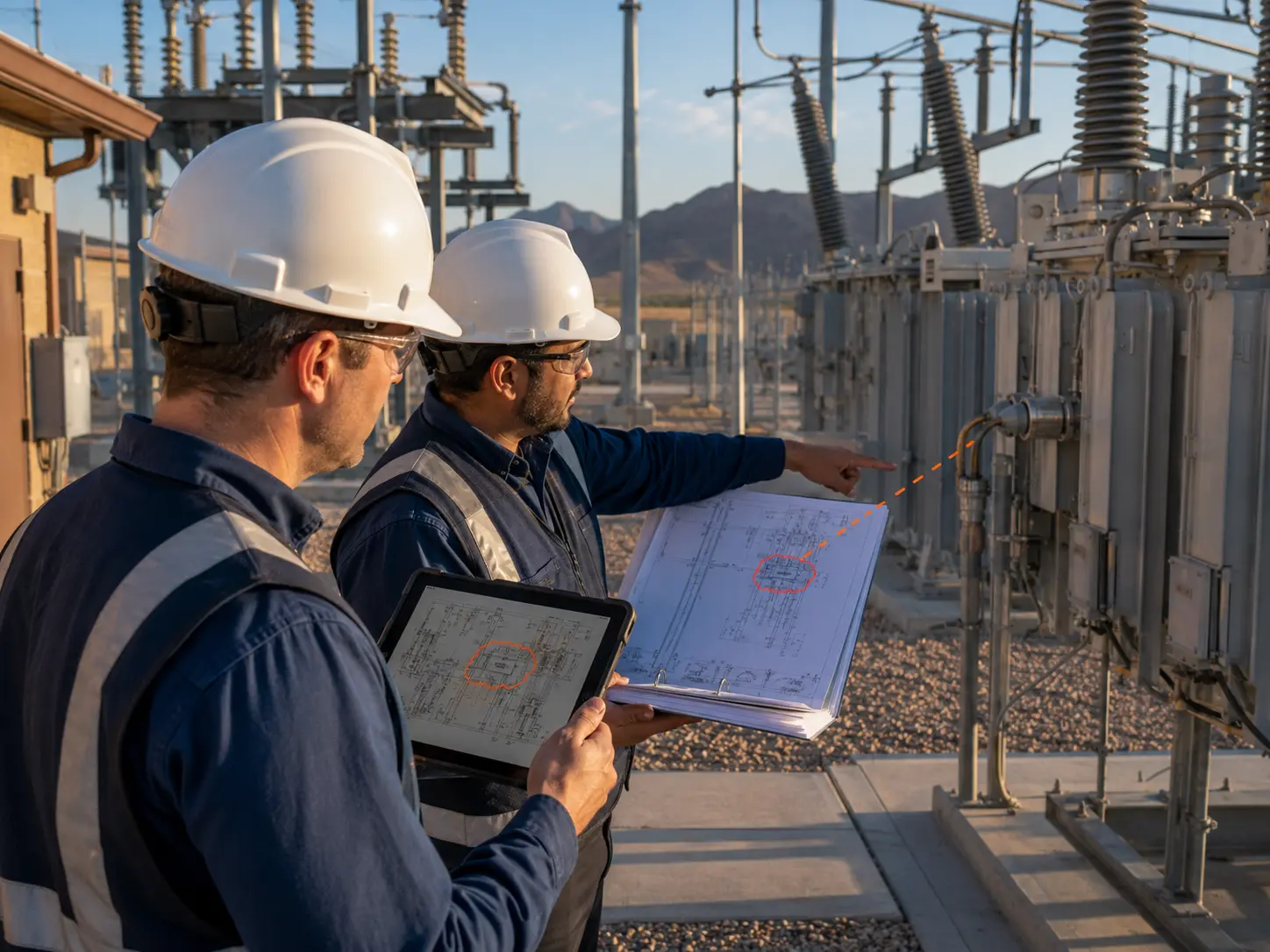
ARUSI engineers verifying substation drawings against installed equipment before commissioning

A Substation Design Error Doesn't Surface in Review. It Surfaces at Commissioning, When the Outage Window Is Already Open.

Substation mistakes are the most expensive kind in this business. An outage window takes months to schedule. A respecified transformer or switchgear set moves an energization date by quarters in today's supply market. An interconnection package that fails utility review can cost a developer their queue position, and the project with it.

That's why this reader checks references first and marketing copy never. We build to match. Engineer-supervised QA/QC on every package, daily fluency in SRP and APS standards and review processes, and a scope you can verify line by line before you commit.

We're a Service Disabled Veteran-Owned Small Business based in Phoenix, working inside the same utility standards this work answers to.

— How We Work

What Makes Working With ARUSI Different

01

Already inside your standards and review world.

We work daily in SRP and APS standards, work-order conventions, and review processes, the same utilities this work answers to. A vendor already inside your world carries less onboarding risk on substation scope.

02

Program discipline at utility scale.

QA/QC gates, weekly hours tracking against estimates, and documented change control. Substation buyers weight process maturity heavily, and this is process built on real program volume.

03

A scope you can verify.

We name what we self-perform and what we don't, in writing. Physical, civil/structural, and drawing scope is stated separately from protection and control, system studies, and commissioning. You'll never find out at commissioning that a scope line was assumed.

04

Substation-specific depth.

Engineering, this card is the one that converts this reader and it is currently empty. Supply: which staff carry substation design backgrounds, what physical/civil/structural scope has been delivered, and on which stations. Without it, this card should be cut rather than filled with generic language.

— What We Do

Substation Design Support

Substation design support within utility programs, built to the owner's standards.

Owner Standards

Physical Design Support

Station physical design support, bus and equipment arrangements, and general arrangement drawings to the owner's standards.

VERIFY scope

Civil / Structural Packages

Foundations, structures, and grading packages for substation sites, coordinated with the station physical design.

AutoCAD + MicroStation

Drawing Production

Station drawing packages produced under engineer-supervised QA/QC in AutoCAD and MicroStation.

Outage-Driven

Brownfield Modification Packages

Modification and upgrade packages sized to outage windows, governed by existing-record quality and the client's outage calendar.

— The Engagement

How a Typical ARUSI Engagement Works

No ambiguity about how the work starts or how it moves. Here's what to expect.

1

Contact and scoping

You share the station scope (new, expansion, or upgrade), one-line basis, utility standards, outage constraints, and interconnection milestones. ARUSI assesses fit and names what it will and won't self-perform.

2

Proposal

Defined deliverables across physical, civil/structural, and drawing scope, an hour estimate by discipline, and a schedule tied to your outage and procurement calendar. Exclusions explicit, especially protection and control and studies scope.

3

Kickoff

Standards, existing-station records, and site data transferred. Review gates and submittal calendar aligned to the utility's process.

4

Design production

Station physical design, bus and equipment arrangements, civil/structural packages, and drawings produced under engineer-supervised QA/QC to the owner's standards.

5

Utility review and revision

Comments resolved on rapid turnaround, and changes coordinated against equipment procurement so drawings and ordered equipment never diverge.

6

IFC and construction support

Issued-for-construction packages, field question response, and as-builts through energization.

— Answers

Frequently asked questions

ARUSI provides substation design support within utility programs: physical design support, civil and structural packages, and drawing production to the owner's standards, under engineer-supervised QA/QC

Protection and control engineering and system studies such as grounding, arc-flash, and coordination are scoped separately. ARUSI names them on a project only where the capability is staffed and confirmed.

ARUSI works daily in SRP and APS utility standards and produces to the owner's standards on each project.

ARUSI's primary NAICS codes are 541330 (Engineering Services), 541340 (Drafting Services), and 541370 (Surveying and Mapping Services). It also works under 237130 (Power and Communication Line and Related Structures Construction).

ARUSI is headquartered in Phoenix, Arizona, at 4720 E Cotton Gin Loop #140, Phoenix, AZ 85040. It has served clients across Arizona and the Southwest since 1987.

Yes. ARUSI's SDVOSB status and enterprise certifications let national firms meet set-aside and small-business goals while keeping local engineering depth on the team. ARUSI bids as both prime and subcontractor.

— Trust Signals

Certifications & Credentials

SDVOSB
Service-Disabled Veteran-Owned Small Business
DBE
Disadvantaged Business Enterprise — Arizona Unified Certification
SBE
Small Business Enterprise — City of Phoenix
— Get Started

Ready to Talk About Your Project?

Share the station scope and your outage and interconnection milestones, and ARUSI will tell you exactly what it can carry.

We respond within 24–48 hours.