Telecommunication Engineering & Design

Fiber and OSP engineering for national carriers, regional fiber providers, and utility communications programs across the Southwest and internationally. We work both sides of the pole.

  • SDVOSB Certified
  • Since 1987
  • OPGW on Live Transmission
  • Multi-Jurisdiction Permitting
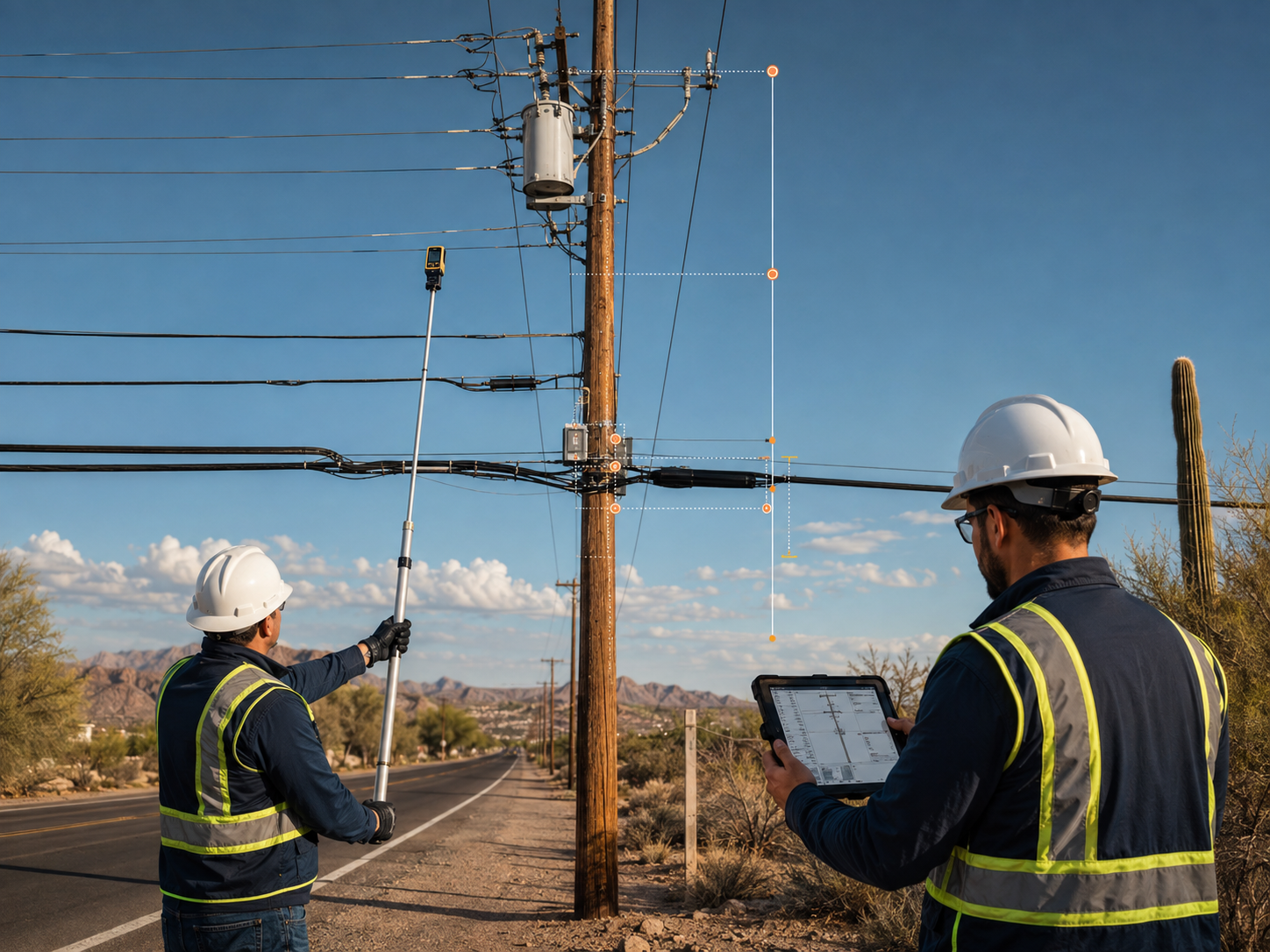
ARUSI engineers measuring utility-pole clearances for an aerial fiber attachment design

In Fiber Deployment, the Schedule Dies at the Pole Line and the Permit Counter. That's Exactly Where We Work.

Fiber economics are linear-mile economics. Every week a route sits in permitting or make-ready is capital deployed with no revenue clock started. A rejected pole attachment package doesn't just wait, it re-enters the pole owner's queue at the back. And designs that ignore field conditions surface at construction, where a locate conflict or failed make-ready means re-engineering with crews already mobilized.

The slowest mile of every aerial build is the pole line, and that's the mile ARUSI is built for. We design daily for the region's pole-owning utilities and for carrier clients, so our attachment and make-ready packages are built the way the pole owner's reviewers actually read them. Buildable routes, not just drawable ones.

We're a Service Disabled Veteran-Owned Small Business based in Phoenix, which matters directly on federally funded broadband.

— How We Work

What Makes Working With ARUSI Different

01

We work both sides of the pole.

Most OSP shops know the attacher's side only. ARUSI designs daily for the region's pole-owning utilities, SRP and APS, and serves carrier clients too. So make-ready and attachment packages are built the way the pole owner's reviewers read them. That's the rarest capability in this market, and it's why our packages clear.

02

Fiber on transmission is in our record, not our brochure.

ARUSI supported OPGW integration across a multi-corridor 69 kV transmission program of 33 work orders, including structure assessments that avoided unnecessary replacements. Utility fiber programs can hand us the hardest version of the problem.

03

Permitting is a practiced discipline.

Multi-jurisdiction permit support with documented tracking, not an afterthought bolted onto design. We drive submittals through pole owners and permit authorities and turn comments fast enough to hold queue position.

04

Cross-border delivery

ARUSI has carried a three-site telecom infrastructure program across three Mexican states, each under national-utility review, with on-the-ground site work.

— What We Do

Telecommunication Engineering & Design

From a single crossing permit to multi-site, multi-jurisdiction deployment programs, aerial, underground, and on the transmission corridor itself.

Both Sides of the Pole

Route & Attachment Design

OSP route and attachment design produced to the pole owner's and the jurisdiction's actual requirements, under engineer-supervised QA/QC. Buildable routes that account for field conditions, not just clean drawings.

Pole-Owner-Ready

Make-Ready Engineering

Attachment and make-ready packages built to clear the pole owner's review on the first pass, with O-Calc pole loading analysis behind every attachment.

Documented Tracking

Multi-Jurisdiction Permitting

Permit drawings and submittals driven across multiple jurisdictions with documented tracking, sized to the funding deadline or customer commitment on the other side of them.

Fiber on Transmission

OPGW & Utility-Corridor Fiber

Fiber deployed on the transmission corridor itself, where communications and high-voltage engineering meet, including structure assessments that determine where existing structures can carry OPGW without replacement.

Closeout-Ready

Splice & As-Built Documentation

Splice documentation, field-driven redlines, and as-builts through acceptance, the record the client needs for the next phase or the funder's audit.

— The Engagement

How a Typical ARUSI Engagement Works

No ambiguity about how the work starts or how it moves. Here's what to expect.

1

Contact and scoping

You share the route or site scope, serving-area utilities and jurisdictions, and schedule drivers. ARUSI maps the approval path: pole owners, permit authorities, crossings.

2

Proposal and alignment

Defined deliverables, route design, attachment packages, permit drawings, splice documentation, a cadence for program work, and exclusions in writing.

3

Kickoff and data intake

Existing route data, GIS, standards, and pole data transferred. Field verification needs identified honestly up front.

4

Route and attachment design

OSP produced to the pole owner's and jurisdiction's actual requirements, under engineer-supervised QA/QC. Buildable routes, not just drawable ones.

5

Permitting and utility coordination

Submittals driven through pole owners and permit authorities, comments turned around fast enough to hold queue position.

6

Construction support and closeout

Field-driven revisions, redlines, and as-builts through acceptance.

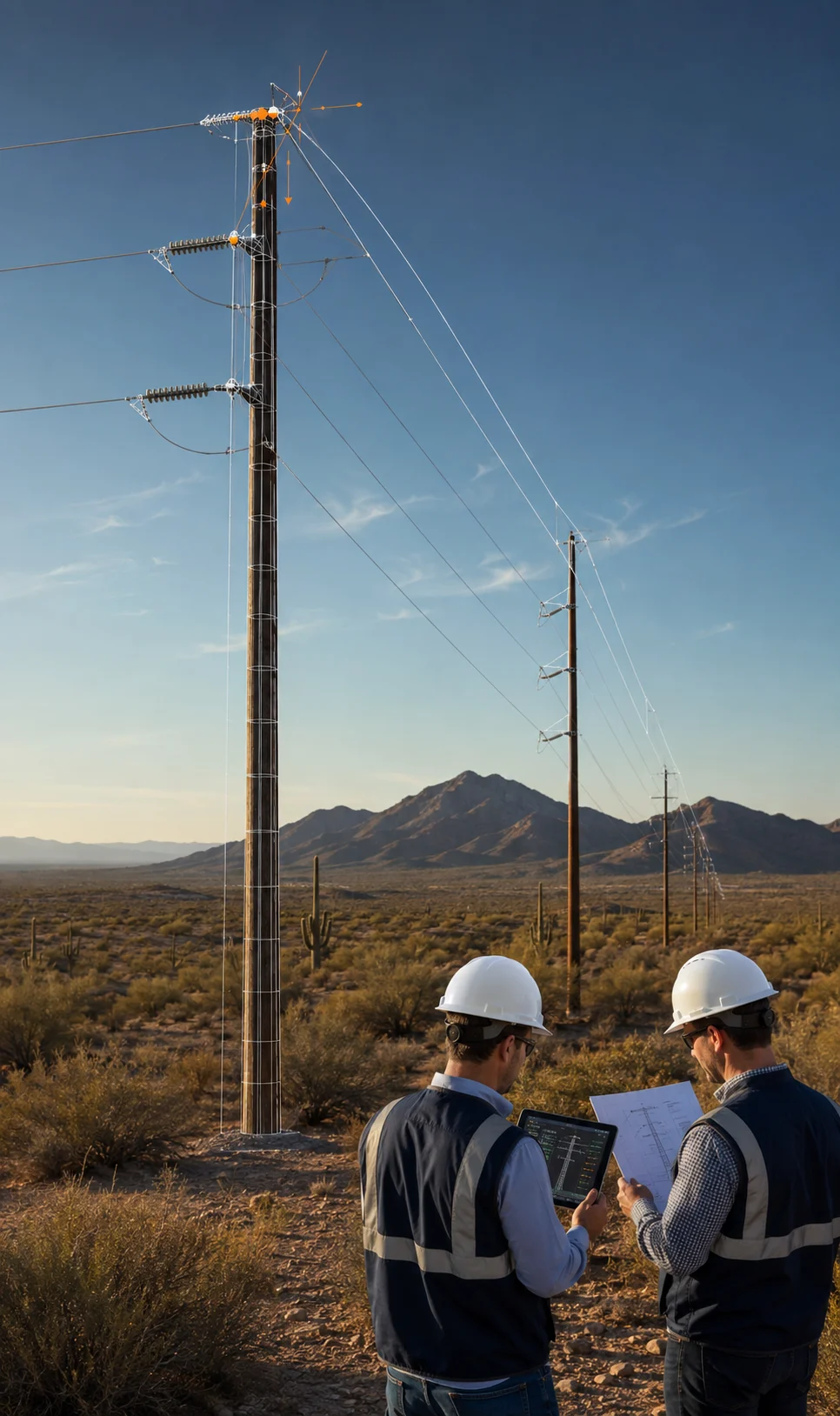
69kV transmission corridor with OPGW stringing on existing structures
— A Real Project

OPGW Fiber Integration Across a 69 kV Transmission Program

Where existing structures could carry fiber without replacement, and where they couldn't, every avoided replacement saved construction cost and outage coordination. Major Arizona utility

The Situation

A major Arizona utility was integrating OPGW across seven corridor groupings and 33 work orders, deploying fiber on energized transmission infrastructure, where communications and high-voltage engineering meet. The open question on every corridor: which structures could carry OPGW as-is, and which needed replacement.

What ARUSI Did

ARUSI supported the OPGW integration across all seven corridor groupings, running structure assessments to determine loading capacity, and held drawing production on schedule across concurrent corridors.

The Outcome

The assessments identified structure replacements that were not required, including one cancelled entirely after review, while schedule held across concurrent corridors.

— Answers

Frequently asked questions

Yes. ARUSI designs daily for the region's pole-owning utilities and serves carrier and fiber-provider clients, so its attachment and make-ready packages are built to the pole owner's actual review standards.

Yes. ARUSI produces make-ready and pole attachment packages with O-Calc pole loading analysis, built to clear the pole owner's review on the first pass.

Yes. ARUSI has supported OPGW integration on a multi-corridor 69 kV transmission program, including structure assessments for fiber loading.

ARUSI's primary NAICS codes are 541330 (Engineering Services), 541340 (Drafting Services), and 541370 (Surveying and Mapping Services). It also works under 237130 (Power and Communication Line and Related Structures Construction).

ARUSI is headquartered in Phoenix, Arizona, at 4720 E Cotton Gin Loop #140, Phoenix, AZ 85040. It has served clients across Arizona and the Southwest since 1987.

Yes. ARUSI's SDVOSB status and enterprise certifications let national firms meet set-aside and small-business goals while keeping local engineering depth on the team. ARUSI bids as both prime and subcontractor.

— Trust Signals

Certifications & Credentials

SDVOSB
Service-Disabled Veteran-Owned Small Business
DBE
Disadvantaged Business Enterprise — Arizona Unified Certification
SBE
Small Business Enterprise — City of Phoenix
— Get Started

Ready to Talk About Your Project?

Bring your route or site scope and your schedule drivers, and ARUSI will map the approval path before anyone prices a thing

We respond within 24–48 hours.